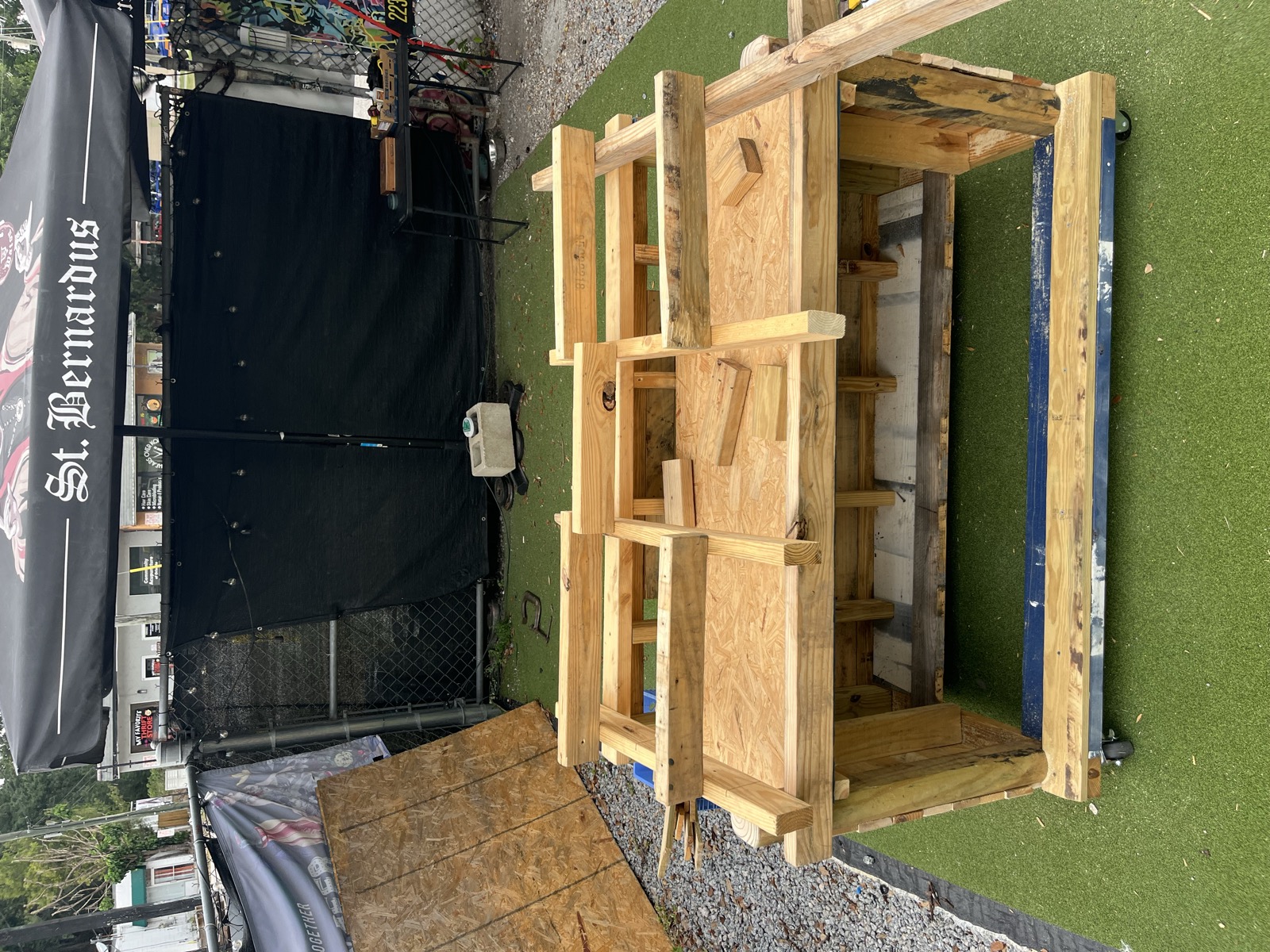
The near-final DJ Pallet Table, built entirely from reclaimed pallet wood for Commission Beer Chamber, Orlando Worked Example

DJ Pallet Table

A pallet build, start to finish — by Absolutely Plausible

A mobile DJ booth with a recessed mixer cutout, on caster wheels, built entirely from reclaimed pallets for an outdoor venue patio. The clearest way to learn the process is to watch it run on a real project — so scroll the timeline below and watch it come together, decision by decision.

100% upcycled pallets 11 working sessions 30 days 33 photos archived

The build, start to finish

Scroll the timeline — Apr 15 through install. Tap any card to expand the full detail.

Apr 15
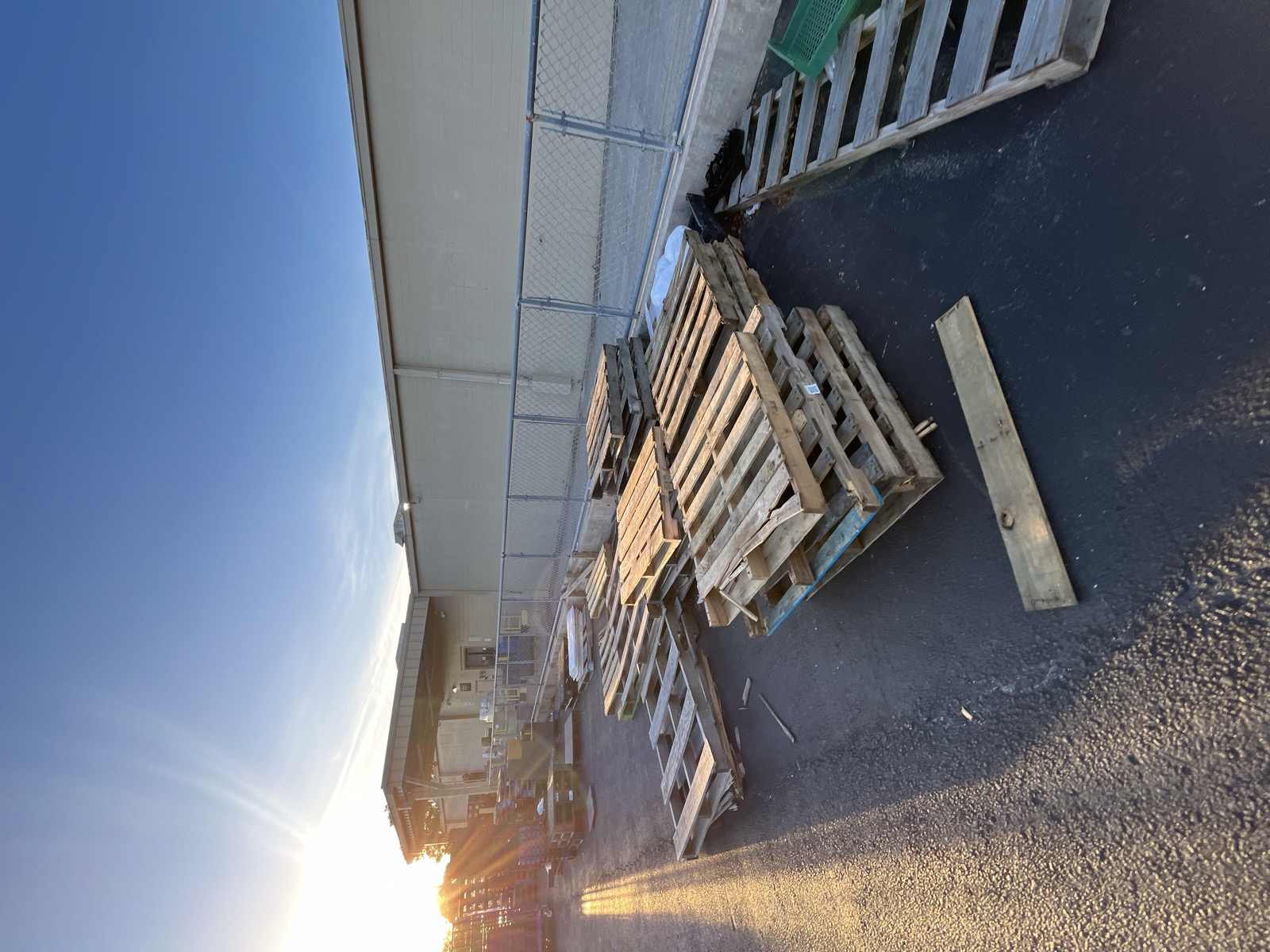
Raw reclaimed pallets stacked before the build begins

Pallets were collected and run against the safety flow before anything came home: IPPC stamp (HT good, MB never), no rental colors, no contamination, no chemical smell. The project begins as raw, free material — all of its value is added by the work that follows.

Reclaimed wood has more unusable sections than new lumber, so the haul was sized with a 30–40% margin for waste from the start.
Apr 21
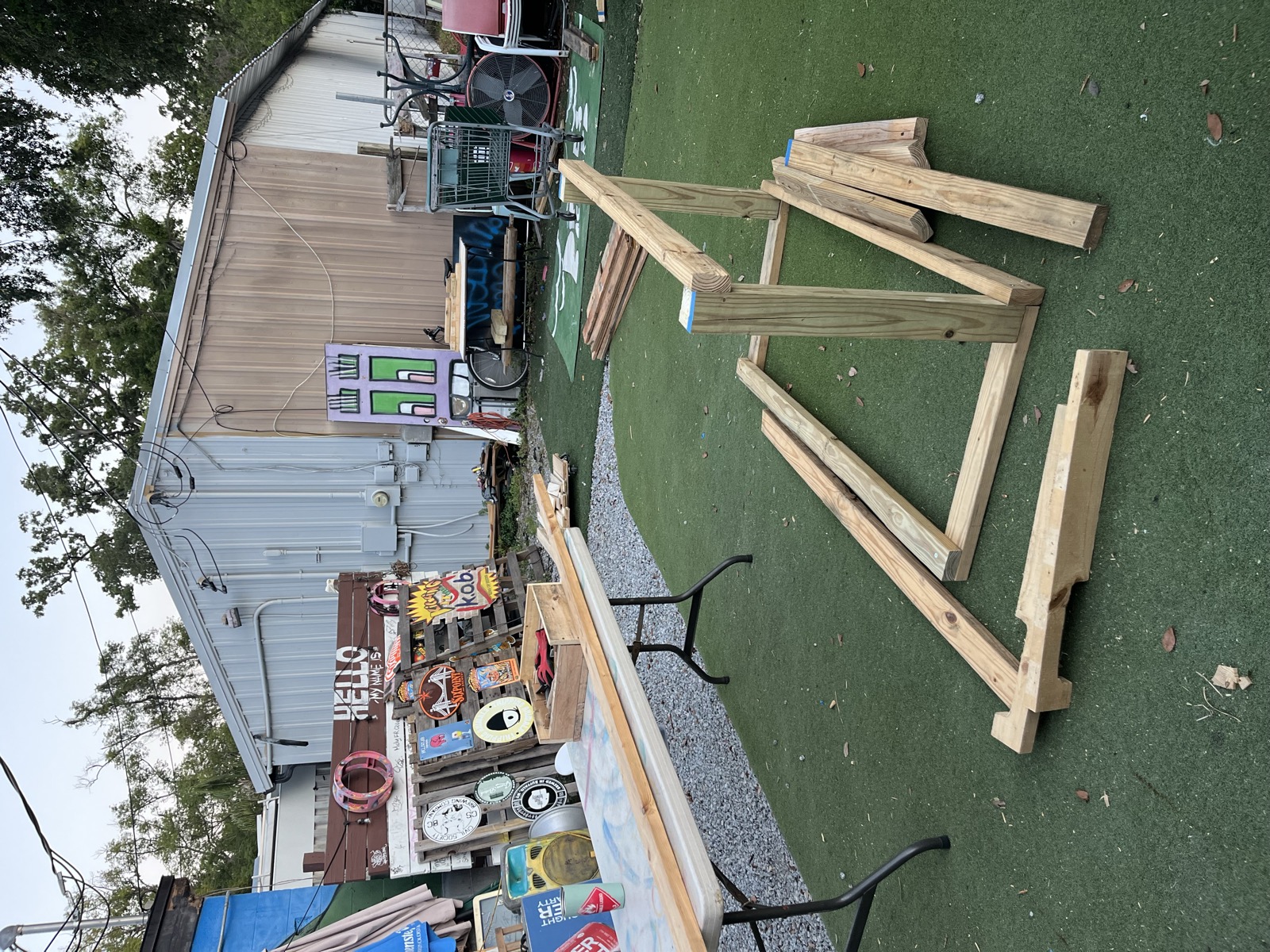
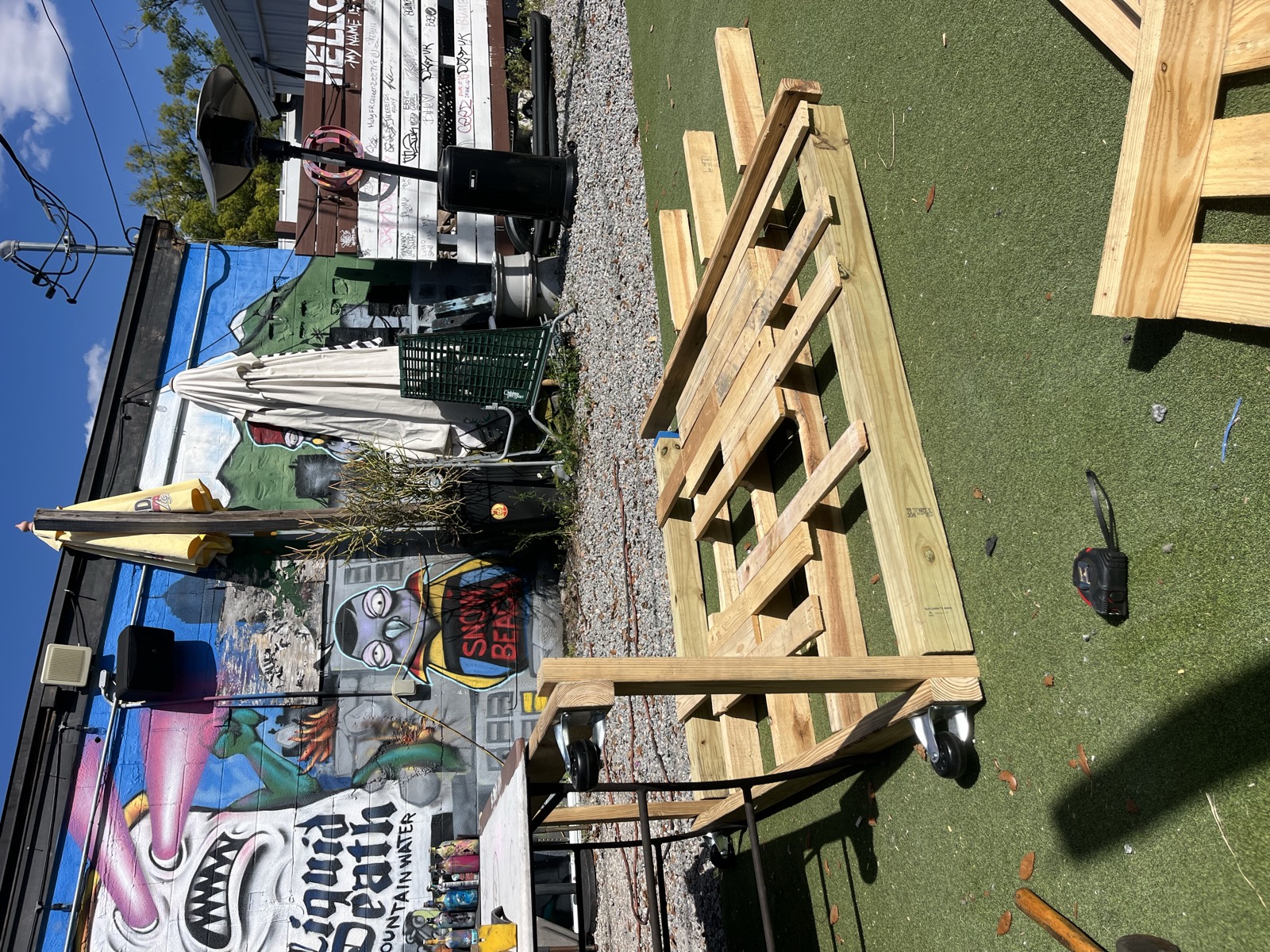
The frame skeleton with caster wheels, early in the build

The build opened with the structural frame: the skeleton that defines every measurement that follows. Caster wheels were planned in from the very beginning so the finished piece would roll — hardware designed in early, not bolted on as an afterthought.

Apr 21
Frame positioned on the Commission Beer Chamber patio

The frame was set in place on the Commission Beer Chamber patio, where dimensions could be checked against the actual space and traffic flow rather than a drawing. Building on location turns the venue itself into a reference — what fits, what clears, what's in the way.

Apr 28
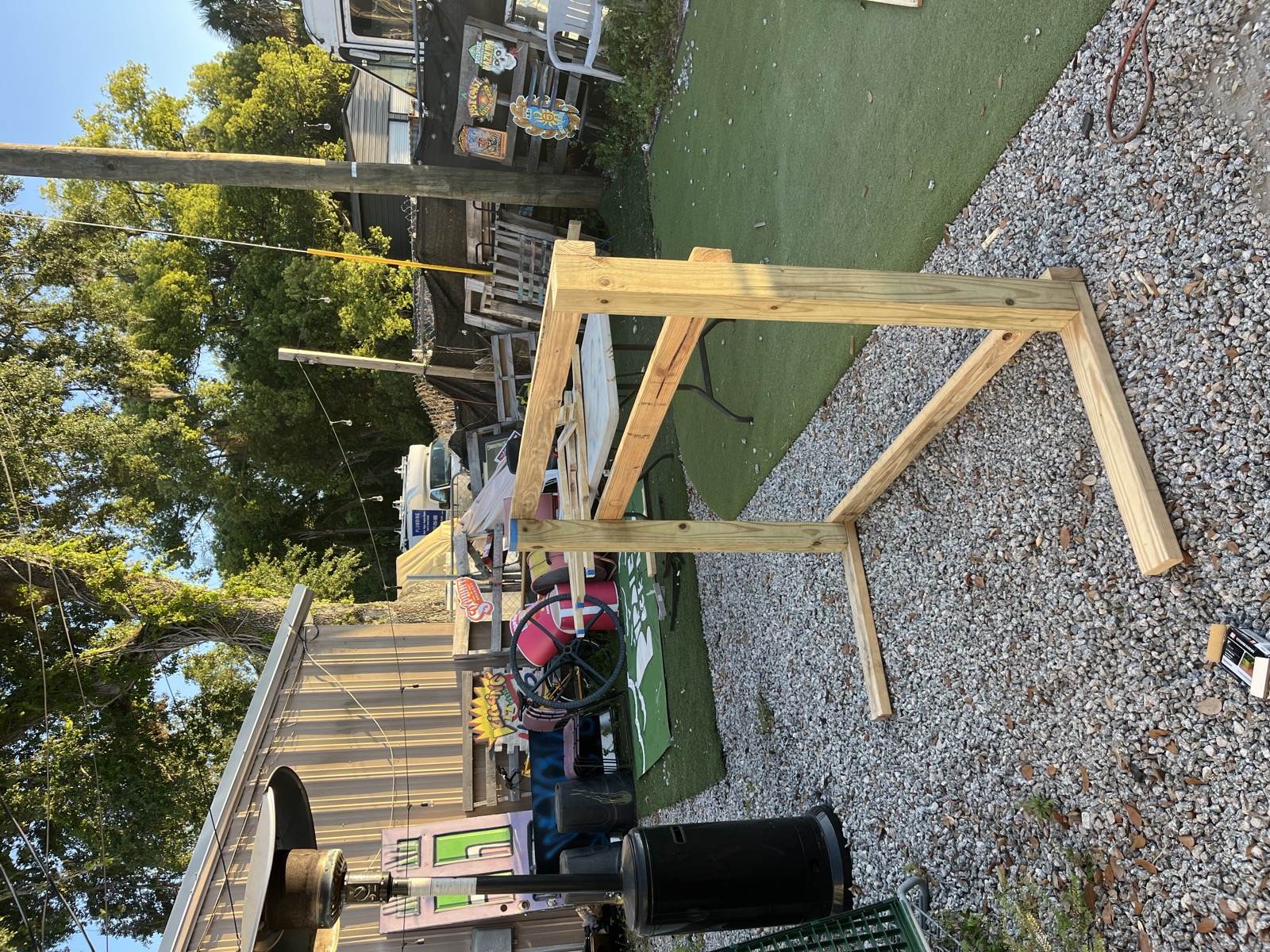
Frame structure growing on-site with vertical supports and cross-members

Frame developed on-site: vertical supports, cross-members, and the load-bearing structure coming together. The order is deliberate — structure before surface. A solid frame first, then the parts people see and touch.

May 6
Slatted tabletop boards coming together on the frame

With the frame solid, the tabletop went on — pallet boards cut and laid to form the surface. The working rule on every cut: leave it a little long when unsure. You can always trim, never un-trim.

May 8
Joinery push — internal supports going in

The largest single push of the project: internal supports and cross-bracing, the carpentry that makes a table rigid instead of wobbly. Screws beat nails for furniture — they hold better and come apart if you make a mistake — and every hole was pre-drilled, because dry reclaimed wood splits easily.

May 8
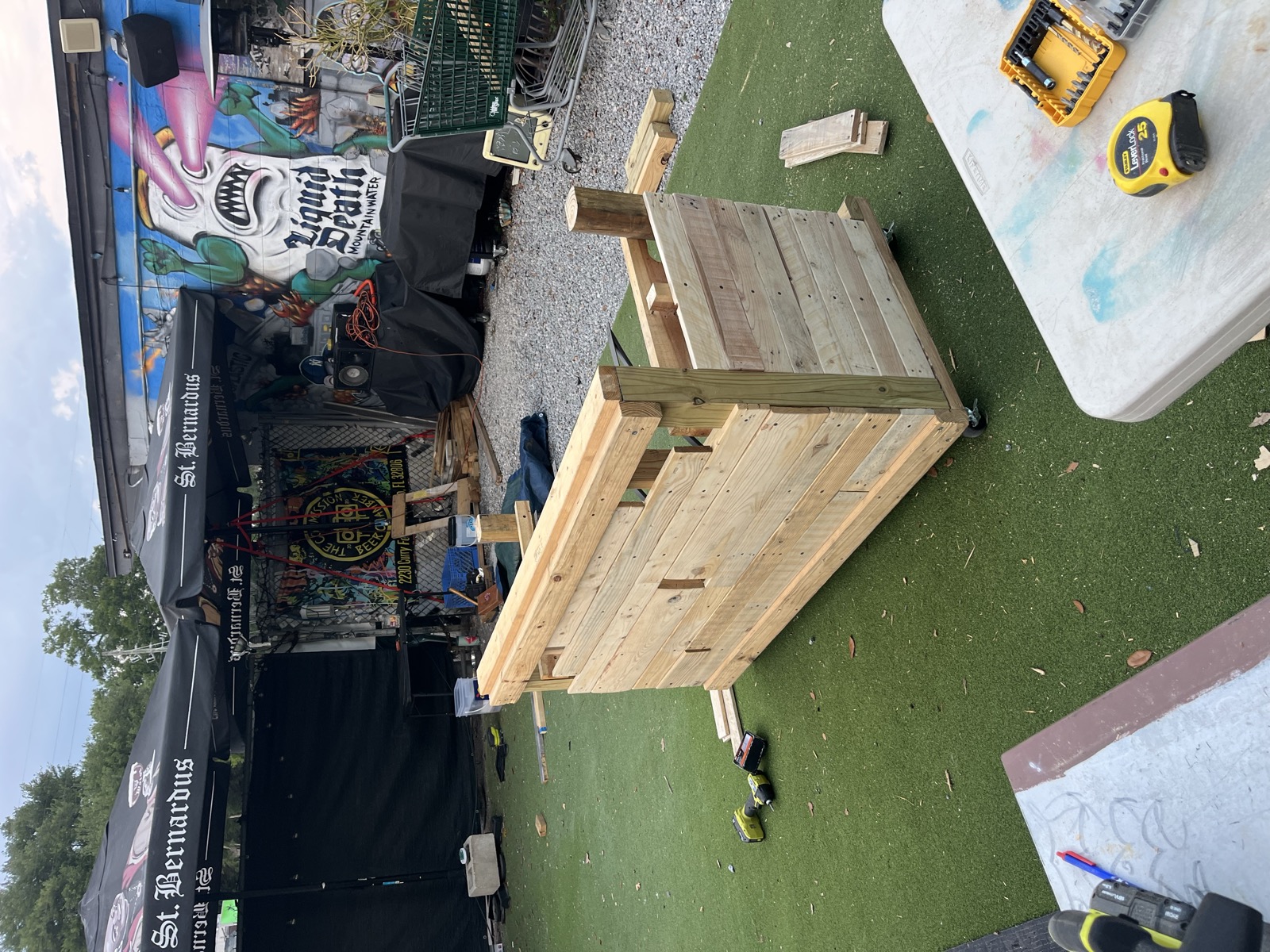
The structural core taking final shape, fully braced

The structural core reaches its final shape. Anywhere the piece could rack or wobble, a brace went in, and everything was checked square as it came together. Rigidity in a build like this is engineered in — never left to chance.

May 11
Finishing details — surface refinement and sanding

A final sanding pass and surface refinement. Because this piece lives outdoors, the plan is an exterior sealant or spar urethane — pallet softwood weathers fast unprotected. Hardware like the casters gets its final attach at this stage.

May 11
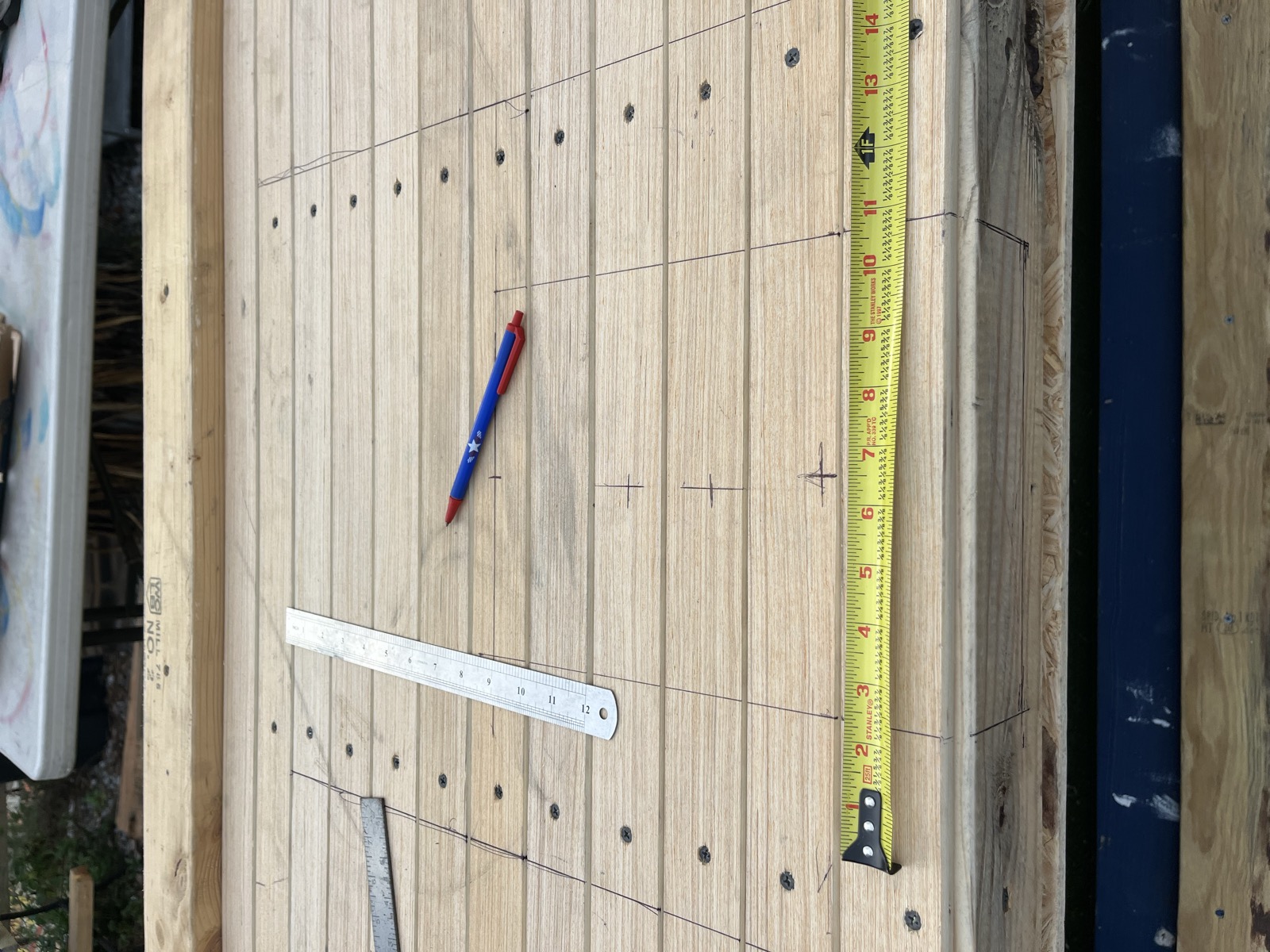
Mixer cutout layout — measured and marked in pencil on the table top

The DJ table's defining feature is a recessed cutout sized to hold a mixer. It was laid out directly on the finished top — measured and marked in pencil against the equipment's real dimensions, not a spec sheet.

Lay the cut out on the actual surface before committing. A cut like this is irreversible — which is exactly why the process says measure twice.

May 14
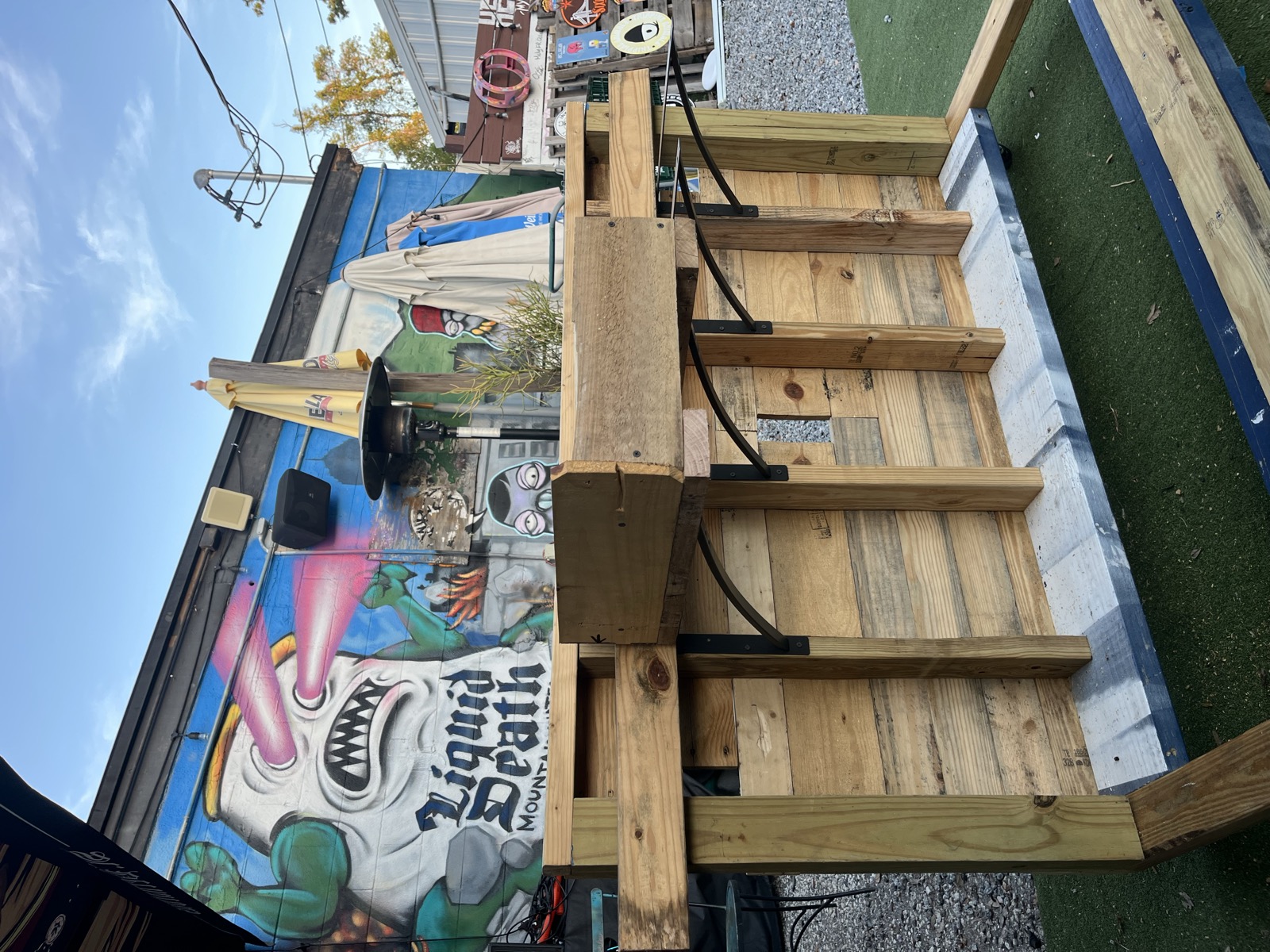
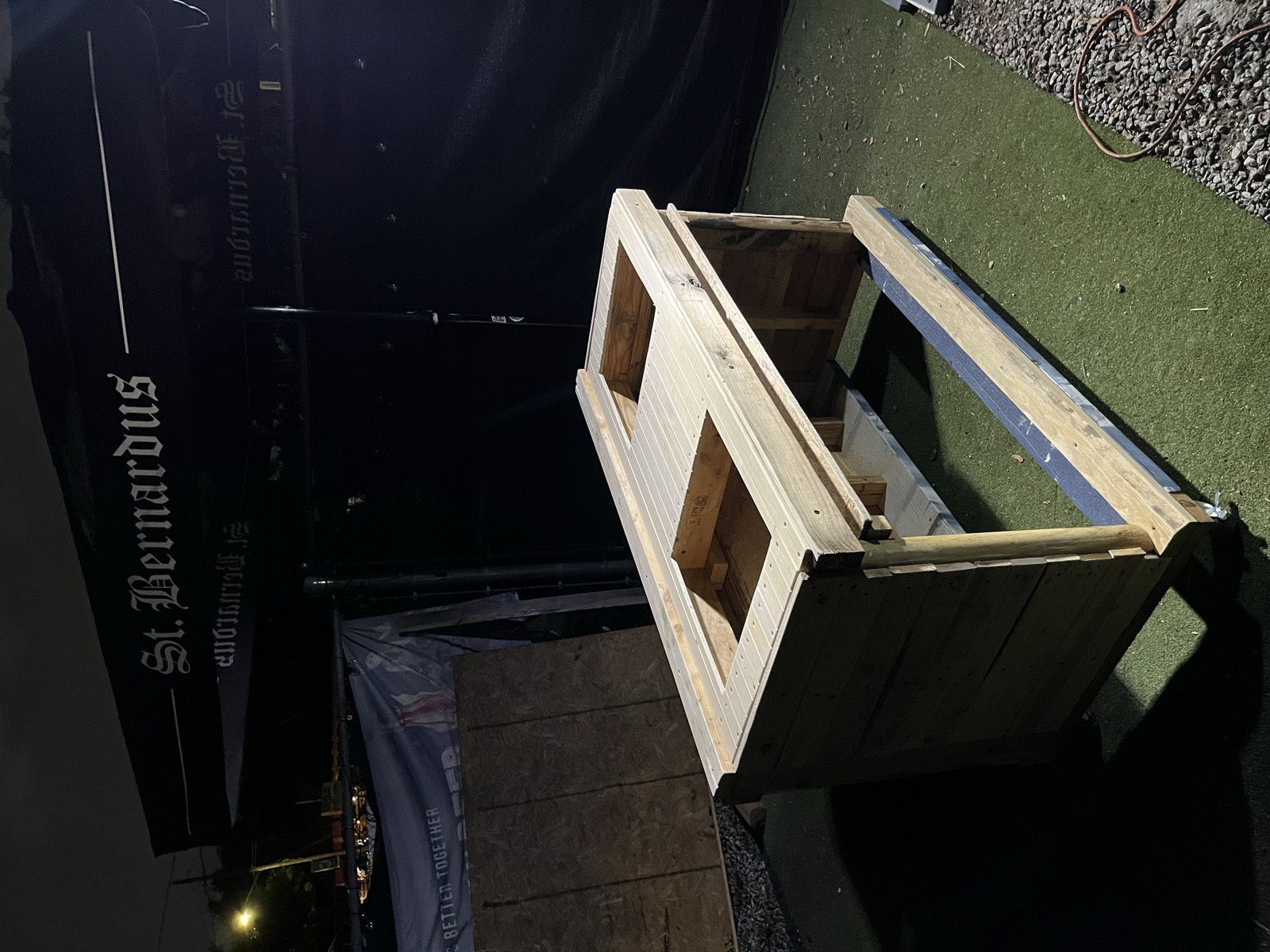
Near-final DJ Pallet Table, side view

The table fully assembled, seen in profile: surfaces refined, the mixer cutout marked. A build reaches "near-final" before it reaches "done" — and the gap between them is real work, not a formality.

May 14
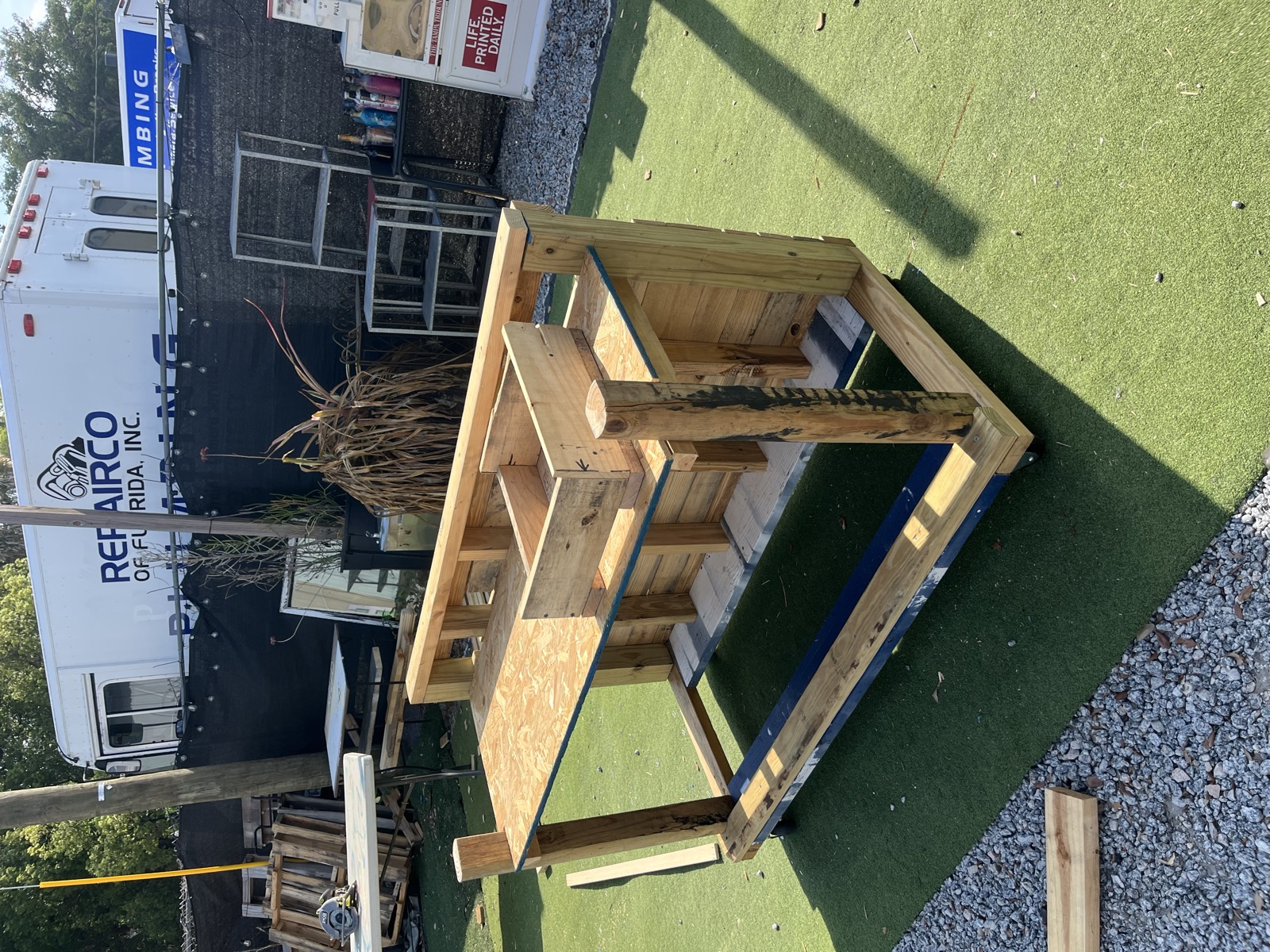
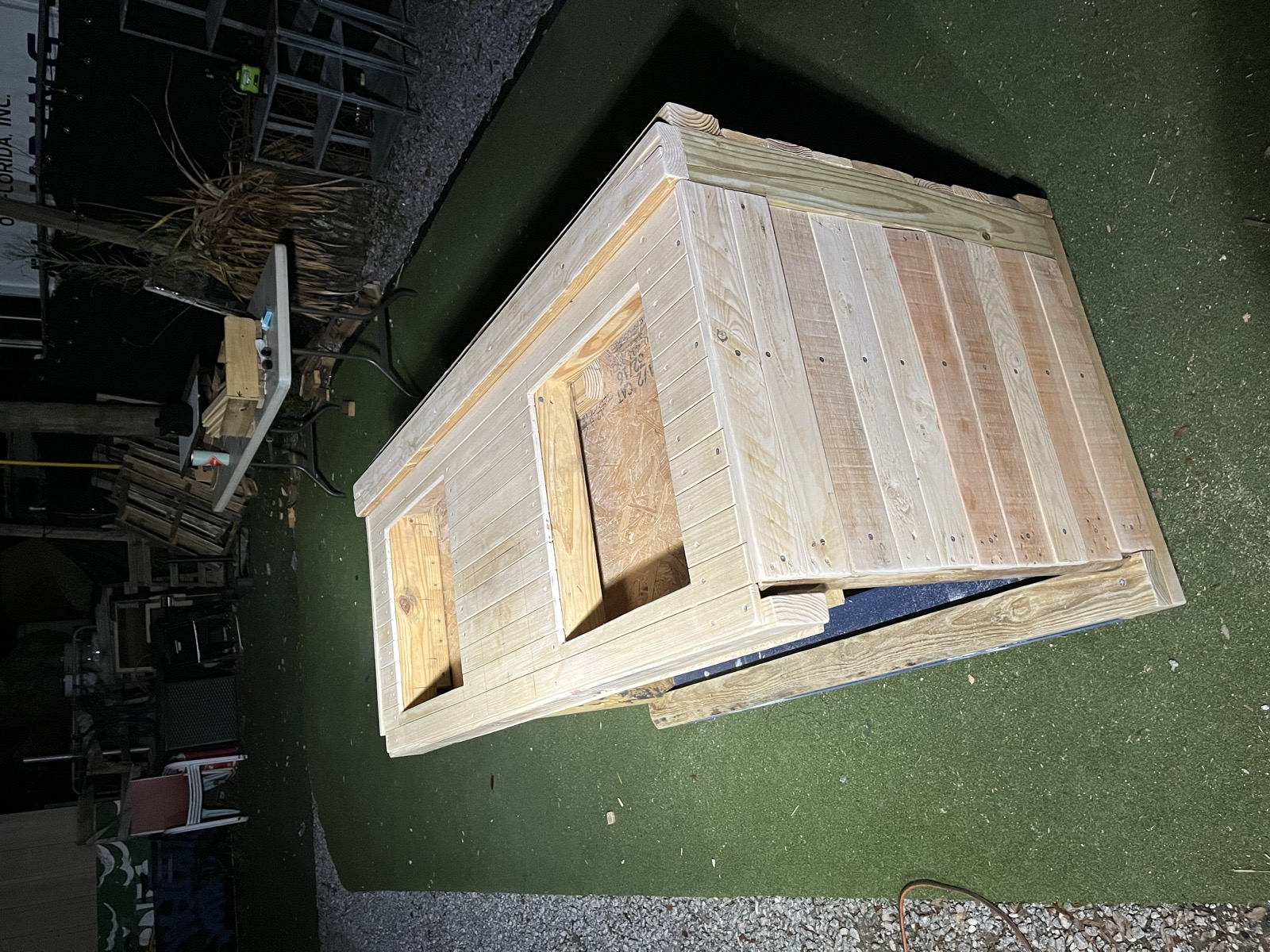
Near-final state — table complete except for the mixer recess

What's left from here is the final mixer-recess cut, the outdoor seal, and the install. The last 10% — a precise cut, a finish coat, the install — is its own phase. Don't rush it.

Jun 29
Coming soon

The final step: cut the mixer recess to the confirmed dimensions, seal the wood for outdoor use, and install the table on the patio at Commission Beer Chamber in Orlando's Hourglass District.

The table's first night in service is at Vinyl Ages — a weekly Monday open-deck night where anyone with a record and the nerve to sign up gets a 15-minute set. No credentials required. Show up, spin, leave it on the floor. That's exactly the kind of project this table was built for.

Install photos and the build video land here after the table goes in.

What this example teaches

Process stepWhat the DJ Pallet Table showed
Source + InspectIt all starts as a free pile of wood — value is added by the work
Deconstruct + PrepThe slow, unglamorous half — budget the time
Design & MeasureStructure first; design hardware (wheels) and equipment fit (mixer) in early
Cut + AssembleFrame before surface; brace anything that could wobble
FinishAn irreversible cut waits until the measurement is certain
Install"Near-final" is not "done" — the last phase is its own work

Want the repeatable method behind this build?

Get the guide — $17

The 9-step process, safety decision flow, and Quick Start Checklist. Delivered instantly via Gumroad. PDF, printable, yours forever.